
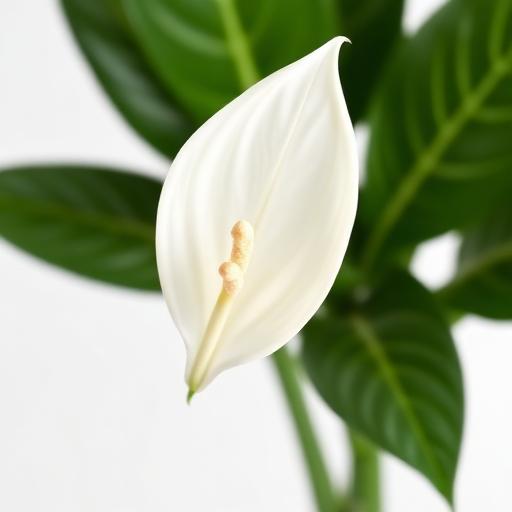
How to Grow Peace Lily at Home in India — Complete Terrace Garden Guide
Step-by-step peace lily growing guide for Indian terrace gardens: pot size, soil mix, watering, organic pest control, hydroponic setup, harvest tips and FAQs.
Growing peace lily on an Indian terrace, balcony or rooftop is one of the most rewarding ways to bring fresh, chemical-free produce into your kitchen. Elegant white blooms. One of the best indoor air purifiers. Thrives in low light. This complete growing guide walks you through everything — from picking the right pot and soil to organic pest control, harvesting and even hydroponic or vertical-farming setups suited to Indian climate. Whether you are a first-time terrace gardener in Delhi, Bengaluru, Mumbai or Chennai, or an experienced urban farmer scaling up to a rooftop micro-farm, the steps below are tuned for real Indian weather, water and soil conditions.
Why grow Peace Lily at home
Peace Lily is a easy crop with a 365-day cycle and an average yield of about 0 kg per healthy plant. For a family of five, 2 plants are usually enough for regular kitchen use.
Home-grown peace lily is fresher, free of synthetic pesticides, and dramatically cheaper than store-bought produce. On a terrace garden it also doubles as natural cooling — the foliage shades concrete surfaces, lowering ambient temperature by 2–4 °C during Indian summers.
Peace Lily is also classified as a survival crop in our system — meaning it is calorie-dense or nutritionally critical enough to be prioritised in a food-sovereignty plan.
Growing requirements at a glance
- Pot size: at least 6 L (deeper is better for root development).
- Root depth: 20 cm of loose, well-draining soil.
- Spacing: 30 cm between plants for healthy airflow.
- Sunlight: bright shade with little direct sun.
- Temperature window: 15°C – 30°C — outside this range, growth slows sharply.
- Water: roughly 2 L per plant per week, split across waterings.
- NPK ratio: 3-3-3 for balanced foliage, root and fruit development.
- Days to harvest: about 365 days from sowing.
Stick to these numbers as a baseline and adjust ±10–20% based on your microclimate. A south-facing Delhi terrace in May behaves very differently from a shaded Bengaluru balcony in July.
Best soil mix for Peace Lily
A reliable terrace mix for peace lily is 40% good-quality garden soil or red soil, 30% well-rotted cow-dung compost or vermicompost, 20% cocopeat for moisture retention, and 10% coarse river sand or perlite for drainage.
Add a handful of neem cake and a tablespoon of bone meal per 15 L of mix. Neem cake suppresses nematodes and soil-borne fungi, while bone meal provides slow-release phosphorus — critical for the root and leaf phase.
Always check drainage: water poured into a freshly potted container should drain within 30 seconds. Waterlogged roots are the single biggest killer of terrace-grown peace lily.
Seed germination guide
Sow peace lily seeds during any time of the year. Germination typically takes 5–14 days depending on temperature.
Start seeds in small trays or paper cups filled with a 50:50 cocopeat–vermicompost mix. Keep them in bright shade and mist daily so the surface never crusts. Once seedlings have 3–4 true leaves, transplant them into their final 6 L containers in the cooler hours of evening.
Harden off seedlings for 3–4 days — give them an hour of direct sun the first day, then increase by an hour daily. This prevents transplant shock, which is responsible for most early peace lily losses on Indian terraces.
Watering schedule
Peace Lily prefers about 2 L of water per plant per week. In peak Indian summer (April–June), split this into daily morning waterings of small volumes — never midday, which scorches roots.
During monsoon, cut back drastically and check soil moisture by pushing a finger 2 cm deep before watering. If it feels damp, skip the watering.
Mulch the soil surface with dried leaves, sugarcane bagasse or coconut husk. A 2–3 cm mulch layer reduces evaporation by up to 60% and keeps roots cool.
Month-wise fertiliser schedule
Week 1–2 (after transplant): liquid seaweed or panchagavya, diluted 1:10, once a week. Helps roots establish.
Week 3–6 (vegetative growth): vermicompost tea or jeevamrutham twice a month. Top-dress with a handful of vermicompost every 15 days.
Flowering & fruiting (or active leaf production): switch to a potassium-rich feed — banana-peel water or wood-ash tea — every 10 days. This matches the NPK target of 3-3-3.
Post-harvest: replenish with compost and rest the pot for 10–14 days before the next planting cycle.
Companion planting
Good neighbours for peace lily: most herbs and aromatic plants. These plants either repel common peace lily pests, fix nitrogen, or attract pollinators that boost yields.
Avoid planting alongside: none of significance. They either compete for the same nutrients or attract overlapping pest species.
On a small terrace, even a single pot of marigold or basil within 1 metre of your peace lily plants can noticeably cut aphid and whitefly pressure.
Common pests and organic control
Watch out for: minimal — a hardy crop.
Neem oil spray (universal): 5 ml cold-pressed neem oil + 1 ml mild liquid soap in 1 L water. Spray on the underside of leaves at sunset, once a week.
Garlic-chilli extract: for sap-suckers like aphids and thrips, blend 10 garlic cloves + 5 green chillies in 1 L water, strain, dilute 1:5 and spray.
Yellow sticky traps: a low-tech, terrace-safe way to monitor whitefly and fungus gnat populations before they explode.
Avoid systemic chemical pesticides on edible terrace crops — residues build up in small pots much faster than in open fields.
Terrace gardening tips for Peace Lily
Indian terraces get extreme — 45 °C surface temperatures in May are normal. Raise pots on bricks or a wooden pallet to keep root zones 5–10 °C cooler.
Use light-coloured pots (terracotta, white plastic). Dark containers cook roots in direct sun.
Wind on high-rise terraces dries pots fast. Group peace lily containers together to create a humidity micro-zone, and install a simple drip irrigation kit if you travel often.
Inspect the underside of leaves every 3–4 days. Most pest infestations are reversible if caught in the first week.
Hydroponic and vertical farming compatibility
Peace Lily is challenging in pure hydroponics because of its 20 cm root depth and 0 kg yield expectation. If you want to try, use a large Dutch bucket with cocopeat as the substrate rather than bare-root NFT.
For vertical setups, choose a tower garden with at least 8 cm pocket-to-pocket spacing. Keep EC at 1.6–2.2 mS/cm and pH between 5.8 and 6.3 for best uptake.
Smart-farming additions like soil-moisture sensors, automated drip timers and pH dosing pumps can fully automate a 10–20 plant peace lily setup on a 100 sq ft terrace.
Harvesting guide
Peace Lily is ready to harvest about 365 days after sowing. Look for mature size, firm texture and full colour development.
Use clean, sharp scissors or secateurs — never tear the plant. Store fresh harvest in a perforated bag inside the refrigerator's crisper drawer; most home-grown peace lily stays at peak quality for 5–8 days.
Month-by-month calendar for India
| Month | Activity |
|---|---|
| Jan | Sow seeds / transplant seedlings · Harvest mature plants |
| Feb | Maintain — water, mulch, monitor pests |
| Mar | Maintain — water, mulch, monitor pests |
| Apr | Sow seeds / transplant seedlings · Harvest mature plants |
| May | Maintain — water, mulch, monitor pests |
| Jun | Maintain — water, mulch, monitor pests |
| Jul | Sow seeds / transplant seedlings · Harvest mature plants |
| Aug | Maintain — water, mulch, monitor pests |
| Sep | Maintain — water, mulch, monitor pests |
| Oct | Sow seeds / transplant seedlings · Harvest mature plants |
| Nov | Maintain — water, mulch, monitor pests |
| Dec | Maintain — water, mulch, monitor pests |
Video tutorials from Indian creators
Frequently asked questions
Can I grow Peace Lily on my balcony in India?
Yes — as long as the spot gets bright shade with little direct sun and you can fit a 6 L container, peace lily grows reliably on Indian balconies. South or south-east facing balconies work best.
How long does Peace Lily take to grow from seed to harvest?
About 365 days under good conditions. Cooler weather slows the cycle; ideal temperature is 15°C – 30°C.
What is the ideal pot size for Peace Lily?
Use at least 6 L with a minimum depth of 20 cm. Anything smaller and the plant will become root-bound and yield poorly.
How often should I water Peace Lily?
Plan for around 2 L per plant per week — daily small waterings in summer, much less during monsoon. Always check soil moisture with a finger before watering.
Which pests attack Peace Lily most?
Peace Lily is largely pest-resistant on Indian terraces. A weekly neem-oil spray keeps populations in check organically.
Can Peace Lily be grown hydroponically?
It is possible but not ideal. Stick to Dutch buckets with cocopeat substrate rather than bare-root systems.
What grows well next to Peace Lily?
Best companions are most herbs and aromatic plants. Avoid planting near none of significance.
When is the best time to sow Peace Lily in India?
Sow during any time of the year. In our seasonal calendar above, the sowing months are clearly marked for your region.